

Thich Nhat Hanh

About Thich Nhat Hanh

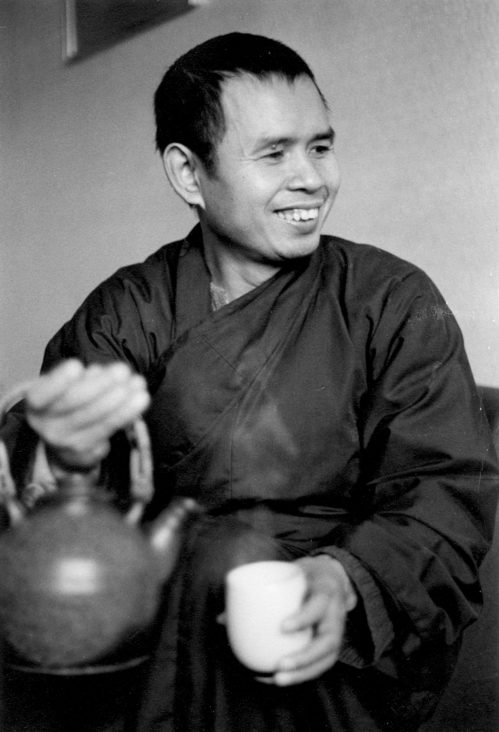
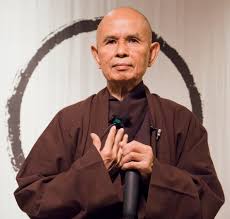
Zen Master Thich Nhat Hanh is a global spiritual leader, poet, and peace activist, revered worldwide for his pioneering teachings on mindfulness, global ethics, and peace. His teachings remain a living inspiration for many mindfulness practice communities today, including House of Mindfulness.

Life Story

Ordained as a Buddhist monk at the age of 16 in Vietnam, Thich Nhat Hanh envisioned an Engaged Buddhism that could directly respond to the needs and suffering of society.

He became a leading teacher and social activist in his home country before being exiled for speaking out in support of peace.

In the West, he played a key role in introducing mindfulness practices and building mindfulness communities (sanghas) around the world. His teachings have influenced politics, business leaders, activists, educators, and many others.

Zen Master Thich Nhat Hanh is also known for his powerful teachings and best-selling writings on mindfulness and peace. A gentle and humble monk, Dr. Martin Luther King Jr. called him “an Apostle of peace and nonviolence” while nominating him for the Nobel Peace Prize. Exiled from Vietnam for nearly four decades, he became a key figure in bringing Buddhism and mindfulness to the West and in shaping the modern Engaged Buddhism movement.

Early Life

Born in central Vietnam in 1926, Thich Nhat Hanh was ordained at Tu Hieu Temple in Hue as a novice monk at the age of sixteen. As a young monk in the early 1950s, he actively participated in efforts to reform and renew Buddhist practice in Vietnam. He was among the first monks to study secular subjects at university in Saigon, and among the first six monks to ride a bicycle.

Social Activism During the Vietnam War

When war broke out in Vietnam, monks and nuns faced a choice between remaining in monasteries for contemplation or responding directly to the suffering caused by war. Thich Nhat Hanh chose to do both, helping to pioneer the Engaged Buddhism movement, a term he popularized through his book Vietnam: Lotus in a Sea of Fire. From that point on, his life was dedicated to inner transformation for the benefit of both individuals and society.

In 1961, he traveled to the United States to teach Comparative Religion at Princeton University, later continuing his academic work and research at Columbia University. In Vietnam, he founded the School of Youth for Social Service, a grassroots organization of 10,000 volunteers grounded in Buddhist principles of nonviolence and compassion.

He also founded Van Hanh Buddhist University in Saigon, the La Boi Publishing House, and an influential peace activism magazine. In 1966, he established the Order of Interbeing, a new community based on traditional Bodhisattva precepts.

On May 1, 1966, at Tu Hieu Temple, Thich Nhat Hanh received Dharma transmission from Master Chan That.

Exile from Vietnam

Later in 1966, he traveled to the United States and Europe to call for peace and an end to the Vietnam War. During this time, he met Dr. Martin Luther King Jr., who later nominated him for the Nobel Peace Prize in 1967. Due to his peace advocacy, he was exiled from both North and South Vietnam and began a 39-year period of exile.

He continued traveling, teaching, and advocating for peace, leading Buddhist delegations at the Paris Peace Talks in 1969.

Founding Plum Village in France

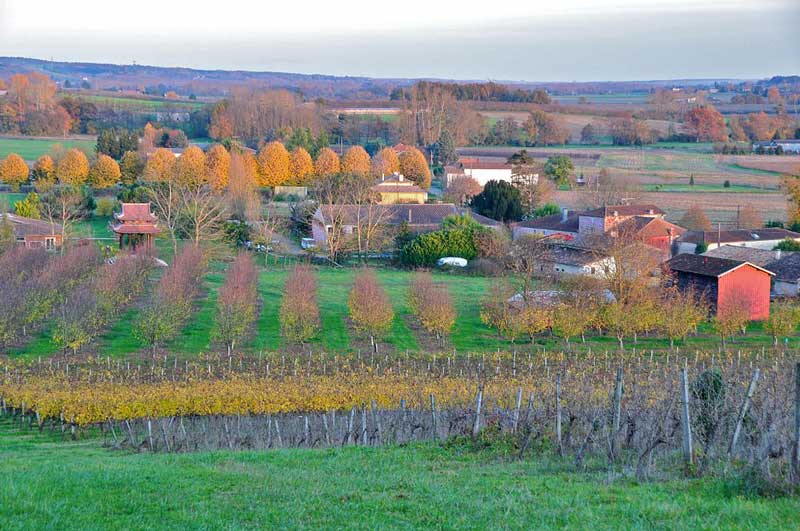
He also taught and wrote extensively on mindfulness and peace. In the early 1970s, he served as a Buddhist researcher and lecturer at the Sorbonne in Paris. In 1975, he founded the Sweet Potato Community (Les Patates Douces) near Paris, and in 1982 established a larger practice center in southwest France, later known as Plum Village.

Under his guidance, Plum Village grew into the largest and most active Buddhist practice center in the West, home to over 200 monastics and welcoming more than 10,000 visitors each year from around the world to learn the “art of mindful living.”

Plum Village welcomes practitioners of all ages, backgrounds, and faiths to participate in retreats and mindfulness practices such as walking meditation, sitting meditation, eating meditation, deep relaxation, and mindful working. These ancient Buddhist practices were simplified and adapted by Thich Nhat Hanh to meet the needs of modern life.

Over 100,000 people have committed to practicing the Five Mindfulness Trainings, a modern adaptation of traditional ethical guidelines for daily life.

He also founded the Wake Up movement, engaging thousands of young people worldwide in mindfulness practice, and launched the Wake Up Schools program to train teachers in Europe, America, and Asia.

A calligrapher as well as a teacher, his simple yet powerful calligraphic works expressing the essence of mindfulness have been exhibited internationally since 2010.

In recent decades, he established monasteries and practice centers in California, New York, Vietnam, Paris, Hong Kong, Thailand, Mississippi, and Australia, as well as the first Applied Buddhism Institute in Europe in Germany.

Plum Village centers also host retreats for business leaders, educators, healthcare professionals, therapists, politicians, veterans, and interfaith communities. It is estimated that over 75,000 people annually participate in Plum Village–guided mindfulness activities worldwide.

In recent years, Thich Nhat Hanh led programs for members of the U.S. Congress and parliamentarians in the United Kingdom, Ireland, India, and Thailand. He also spoke at the World Parliament of Religions in Melbourne and at UNESCO in Paris, calling for concrete steps to reverse the cycles of violence, war, and climate change. During his 2013 visit to the United States, he also taught mindfulness practices at Google, the World Bank, and Harvard Medical School.
Meditation is not to escape from society, but to return to ourselves and see what is happening. When we see clearly, we must act. With mindfulness, we know what to do and what not to do.
– Thich Nhat Hanh –

On November 11, 2014, one month after his 88th birthday and following a significant decline in his health over the previous months, Thich Nhat Hanh suffered a severe stroke. Although he was no longer able to speak and the right side of his body was largely paralyzed, he continued to teach the Dharma and inspire others through his peaceful, calm, and powerful presence.

Thich Nhat Hanh currently resides at Từ Hiếu Temple in Vietnam, where he was ordained by his teacher at the age of sixteen. He has expressed his wish to remain there for the rest of his life. From time to time, he is taken around the monastery grounds in a wheelchair, visiting the temple altar and leading the Sangha in walking meditation around the pond and ancestral stupa. Thay’s return to Từ Hiếu Temple has become a bell of mindfulness, reminding us of how precious it is to be part of a spiritual lineage with deep roots. Whether we have attended a retreat, read one of Thay’s books, or listened to his talks online and been touched by his teachings—we are all connected through this stream of wise and compassionate ancestors.