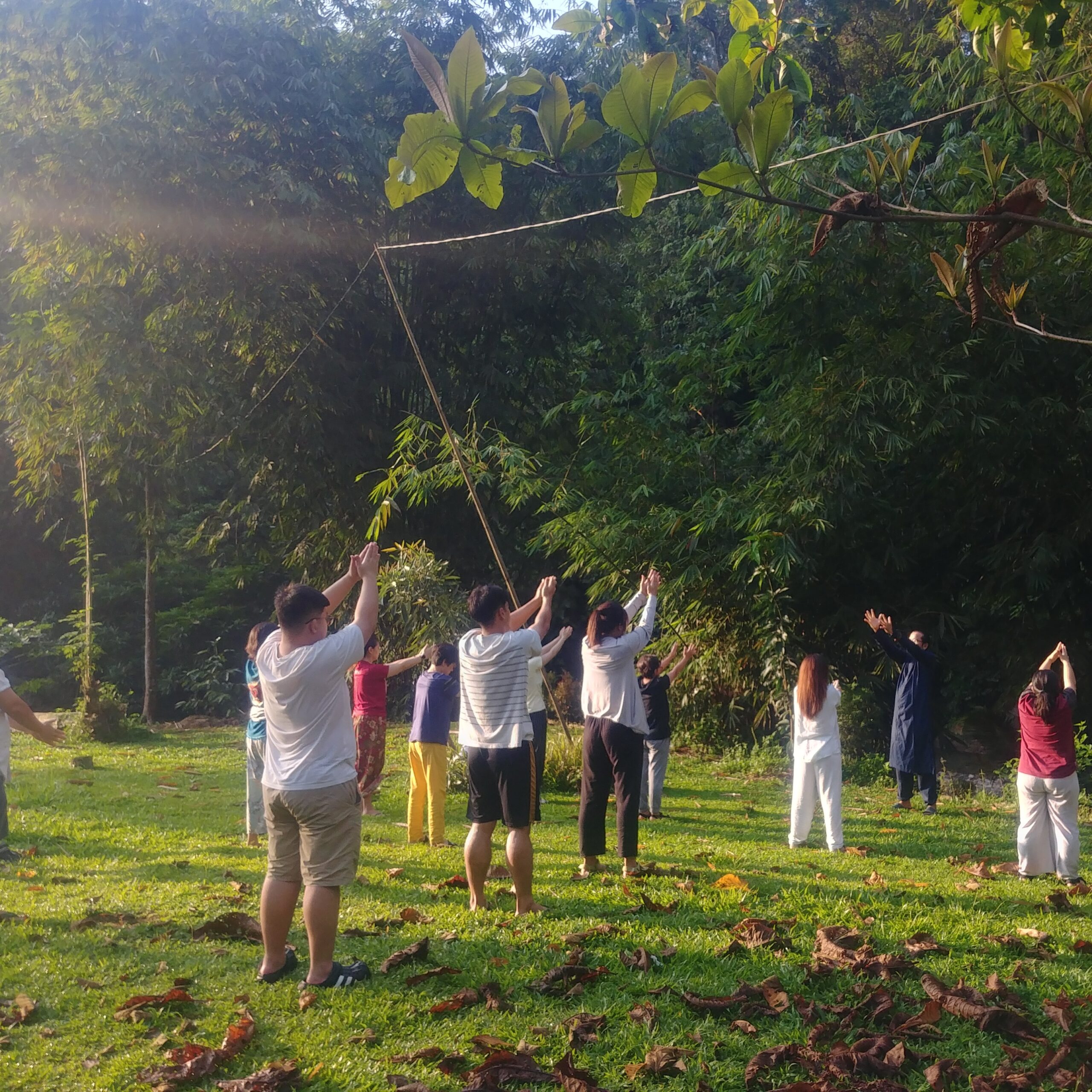

 Mindfulness is always the attention given to something. In Plum Village, mindfulness training begins with full awareness of our breathing and our steps. It is very simple, yet very profound.
When we breathe in, we are simply aware that we are breathing in, and when we breathe out, we are aware that we are breathing out. It can be very relaxing and pleasant to follow the natural flow of our breath as it moves in and out of the body. We can choose to follow the breath in the abdomen or at the nostrils. As the air enters our body, we can feel it refreshing every cell. And as the air leaves our body, we can gently release the tension we find.
Following the in-breath and the out-breath brings us back to the present moment. We arrive in our body, here and now.
Our breath is a solid, stable foundation that is always available for us to return to. Whenever we are carried away by regret about something that has happened, or swept up by fear or anxiety about the future, we can return to our breathing and re-establish ourselves in the present moment.
We do not need to control the breath in any way. We simply observe it as it is. It may be long or short, deep or shallow. With the gentle energy of mindfulness, it naturally becomes slower and deeper.
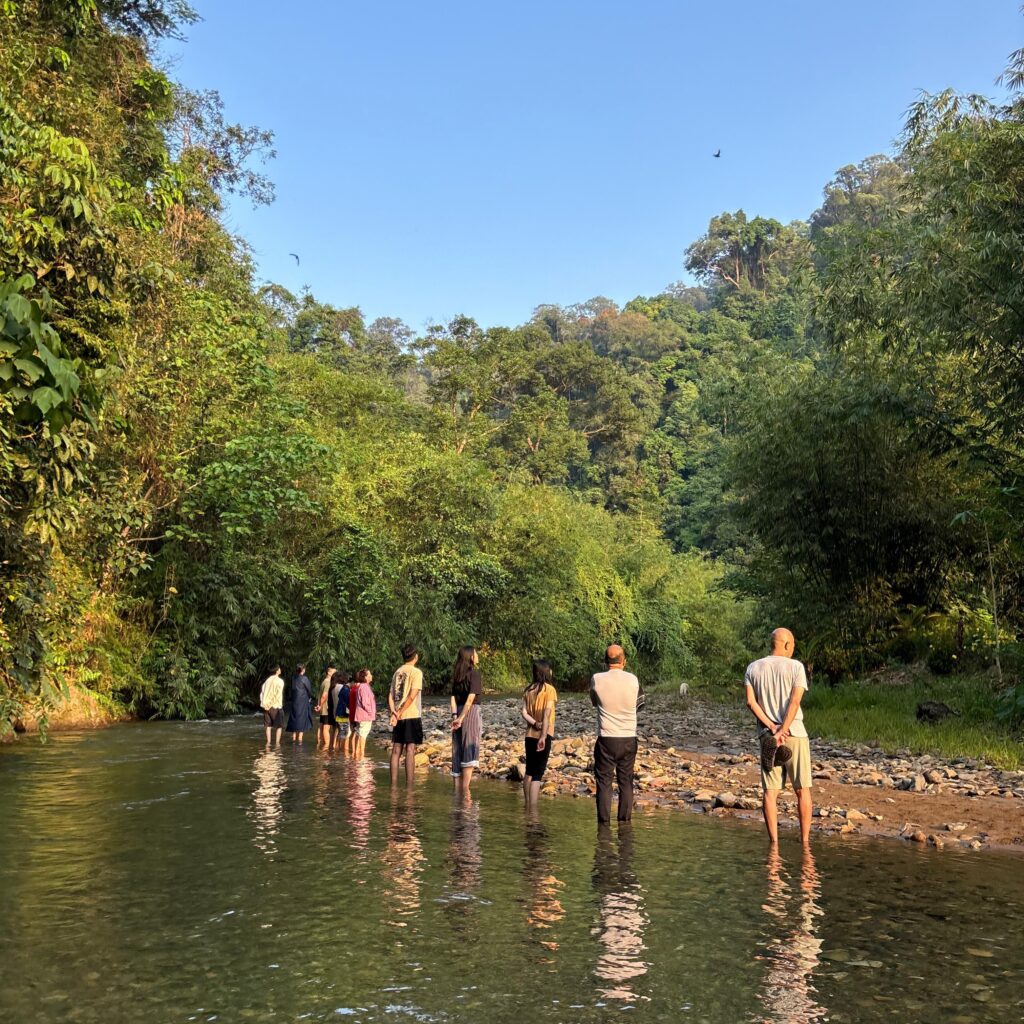 It is possible to walk in freedom and solidity, and to arrive in the present moment with every step. Wherever we walk, we can practice meditation.
Walking meditation means walking in such a way that we know we are walking. We walk in a relaxed way, enjoying each step. We become aware of the contact between our feet and the ground, and of the flow of our breathing. We free ourselves from our thoughts—our regrets about the past, our fears and anxieties about the future, or our busyness in the present moment. We become 100% present with each step.
We become aware of the contact between our feet and the ground. And we begin to coordinate our steps with our breathing. We may take two or three steps while inhaling, then three or four steps while exhaling. This depends on your lungs and the natural rhythm of your steps.
As we continue walking, aligning our breath and our steps, we become aware of our whole body walking. We can release the tension in our shoulders or arms, and feel how miraculous it is to walk on Earth. We can open our ears to hear the sounds around us, and lift our eyes to enjoy the trees, the horizon, or the people around us. Being aware of our five senses, we know that we have arrived in the present moment. Each step can be nourishing, and each step can be healing.
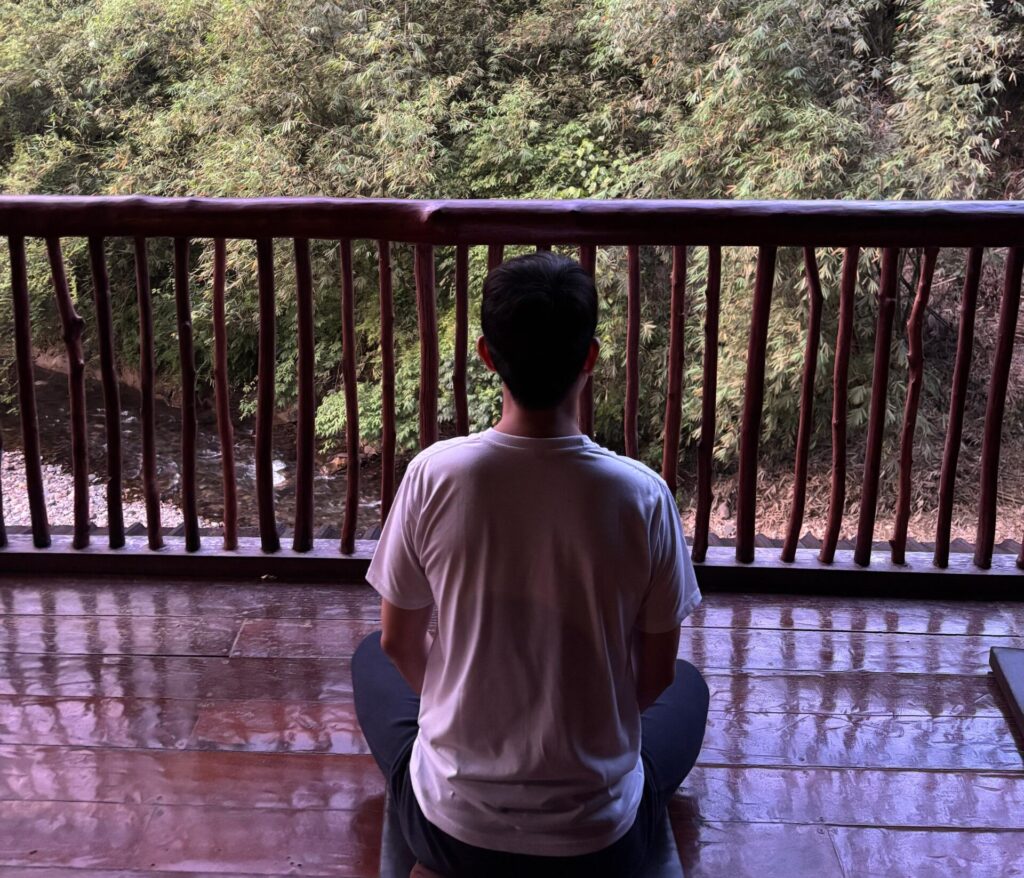
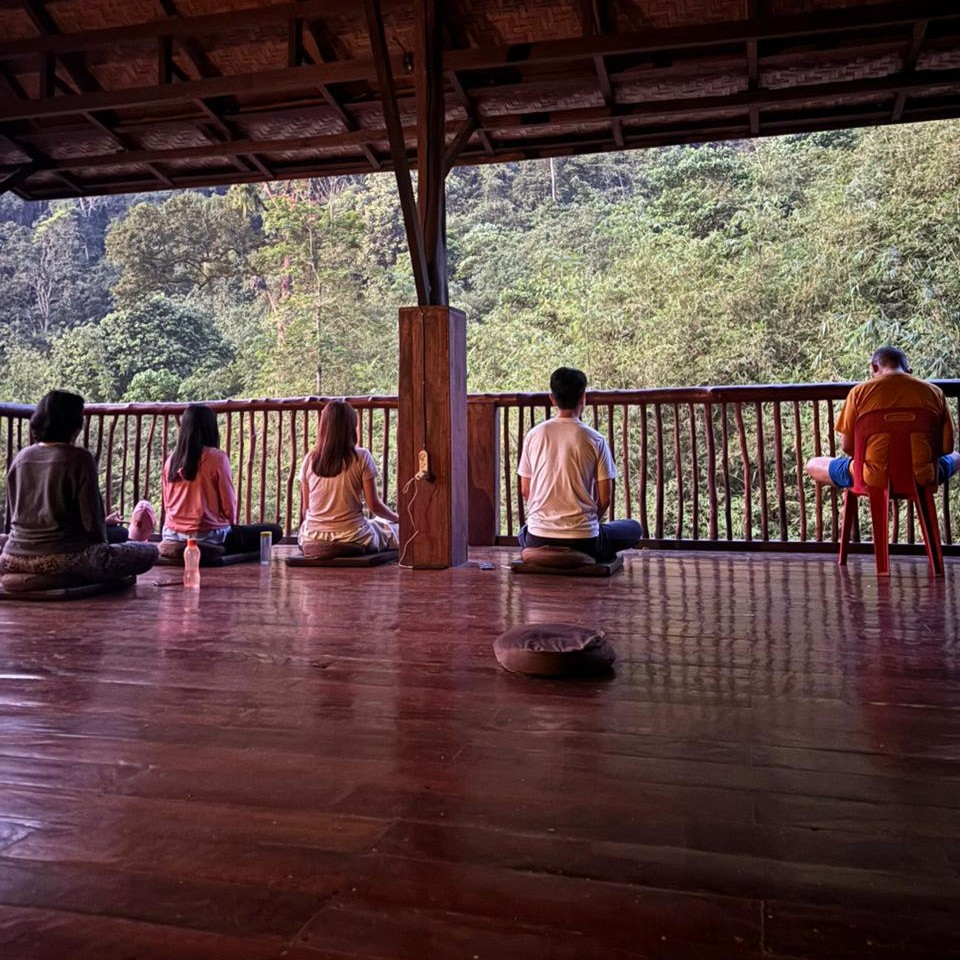 There is an art to sitting in a way that allows us to feel relaxed, peaceful, and at ease. In the Plum Village tradition, we simply sit and enjoy sitting. There is nowhere to go and nothing to do. We can enjoy being there, following our breath, and appreciating life. Our daily lives are often very busy, and we need time to stop, sit, and restore both ourselves and the quality of our presence.
Sitting meditation is not hard work. We do not need to struggle or make effort while sitting. We allow ourselves to be completely at ease.
It is very important to find a comfortable position so that our body can fully relax. You can sit on a cushion or on a chair; cross-legged in the lotus or half-lotus position, or kneeling. We can arrange our posture so that the back is upright yet relaxed, both knees touch the ground, and our hands are gently placed in our lap. We allow the muscles in our face to relax, releasing tension around the jaw and mouth, and gently loosening our shoulders. If our legs fall asleep or begin to hurt while sitting, we gently adjust our position while following our breathing.
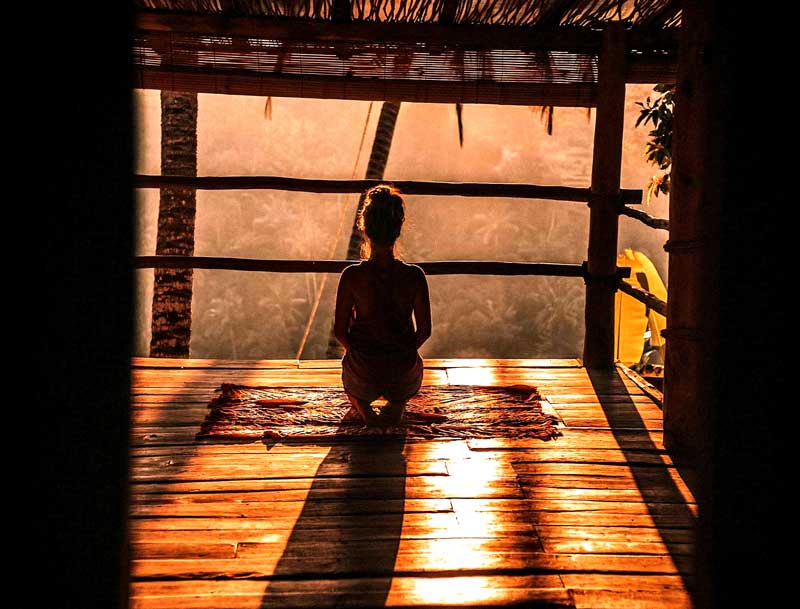
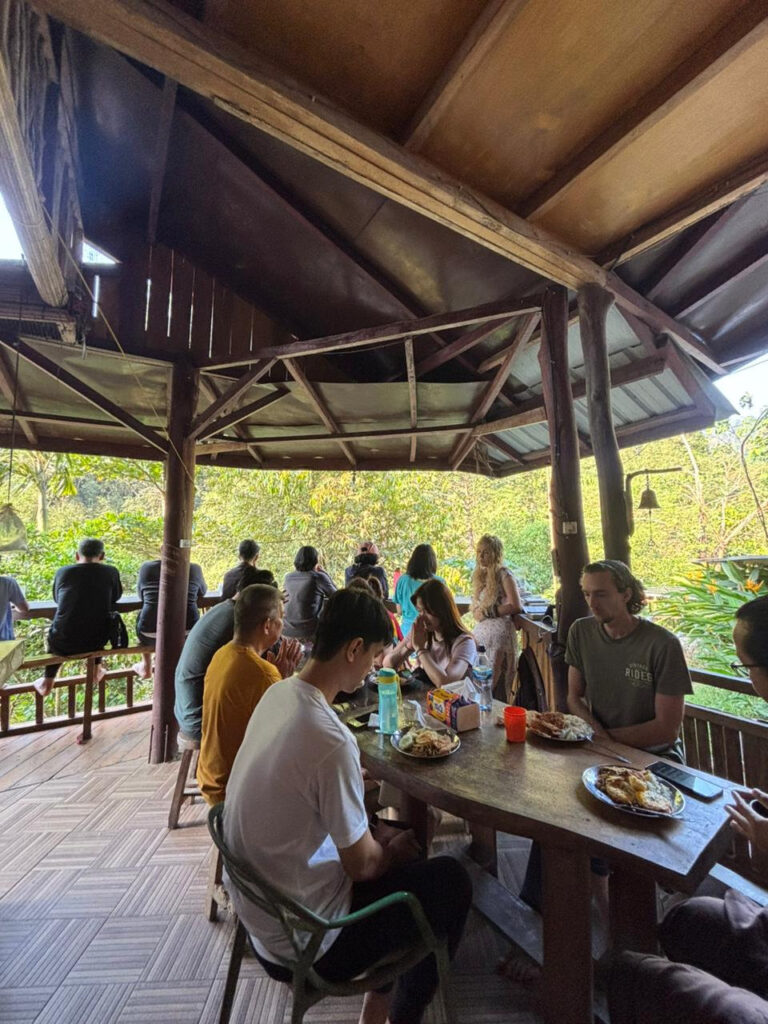 With the energy of mindfulness, even eating can become sacred. We have the opportunity to deeply connect with the miracle of food, and with the people around us—whether family, friends, colleagues, or fellow practitioners on the path.
Mindfulness allows us to look more deeply and see the wonders of the earth and sky within what we eat and drink. We can see the hard work, and all the causes and conditions that have brought this food to us in the present moment, and gratitude and awe naturally arise.
Looking more deeply, we can see that a simple cup of tea, a tangerine, or a piece of bread is nothing less than an “ambassador of the cosmos.” Eating with the energy of mindfulness, we can experience our connection with the planet that nourishes and sustains us, and heal our feelings of loneliness and separation.
We can be fully aware of the miracle of our body—the taste buds in our mouth, and the way our body transforms food into energy and vitality. We also have the opportunity to recognize our habitual energies around food, which may have been passed down to us through many generations.
In Plum Village, we have a contemplation that we recite before we begin eating: